Glioma, Diffuse Pontine

  • Dana-Farber / Children's Hospital Cancer Center logo

    A diffuse pontine glioma or brain stem glioma is a malignant tumor that arises in the supportive tissue of the part of the brain that controls many vital functions. Learn about diffuse pontine glioma and find information on how we support and care for children and teens with brain stem glioma before, during, and after treatment.

Treatment 

The Pediatric Brain Tumor Program at Dana-Farber/Children’s Hospital Cancer Center cares for children with many different types of common and rare brain and spinal tumors, including astrocytomas, medulloblastomas, ependymoma, glioblastomas, and primitive neuroectodermal tumors (PNET).

Your child will receive care from some of the world’s most experienced pediatric brain tumor doctors and internationally recognized pediatric subspecialists.

Our team works closely together to develop a care plan that offers your child the highest possible quality of life after treatment, and takes the needs of your child and your family into account.

Children treated at the Pediatric Brain Tumor Program have access to some of the most advanced diagnostics and therapies, including:

  • quick and accurate diagnosis from our dedicated pediatric neuropathologist
  • access to advanced technologies like the intraoperative MRI, which allows our neurosurgeons to see detailed images of the brain during surgery
  • advanced pediatric radiation oncology services, including targeted radiosurgery and low-dose radiation therapy that minimize exposure to radiation
  • outpatient and oral chemotherapy, which may minimize the number of times your child will need to visit the hospital
  • innovative therapies offered through clinical trials at Dana-Farber, Boston Children's Hospital, and nationally

Thanks to refined surgical techniques and improved chemotherapy and radiation therapy, the majority of children with brain and spinal cord tumors are now long-term survivors. However, they may face physical, social, and intellectual challenges that require specialized care.

Our clinic for survivors of childhood brain tumors provides fully coordinated follow-up care that includes neurologic assessment, hearing and vision monitoring, physical therapy, psychosocial care, and intellectual function evaluation.

We also offer resources to help children make the transition back to school and maximize their ability to learn.

Contact us

We understand that a cancer diagnosis is difficult to cope with. We’re here to help. To schedule a consultation or second opinion for your child, call us at 1-888-733-4662.

Learn more about the Pediatric Brain Tumor Program

Information for: Patients | Healthcare Professionals

Diffuse Pontine Glioma    

Overview

Having a tumor in the brain is always a very serious matter, and a diffuse pontine glioma (also called a brainstem glioma) is no exception. Diffuse pontine glioma is a highly aggressive and difficult to treat brain tumor and is found at the base of the brain in the pons, which controls vital body functions, such as breathing.

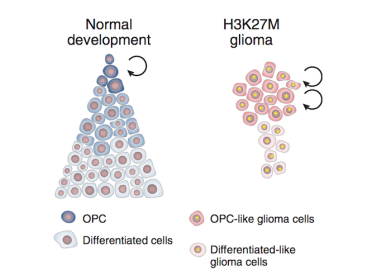
  • Diffuse pontine glioma is a glial tumor, meaning that it arises in the glial (supportive) tissue of the lowest, stem-like part of the brain, which controls many of the body’s most vital functions.
  • Diffuse pontine gliomas account for 10 to 15 percent of all childhood central nervous system tumors.
  • The median age at diagnosis is 5 to 9 years old but they can occur at any age in childhood.
  • These tumors occur with equal frequency in boys and girls and do not generally appear in adults.

As you read on, you’ll find detailed information about diffuse pontine gliomas.

How Dana-Farber/Children’s Hospital Cancer Center approaches diffuse pontine glioma

If your child is cared for at Children’s, she or he will be seen through Dana-Farber/Children’s Hospital Cancer Center, an integrated pediatric oncology program through Dana-Farber Cancer Institute and Boston Children's Hospital that provides — in one specialized program — all the services of both a leading cancer center and a pediatric hospital.

In-depth

We understand how overwhelming a diagnosis of diffuse pontine glioma can be. Right now, you probably have a lot of questions. How dangerous is diffuse pontine glioma? What is the very best treatment? What do we do next?
We’ve tried to provide some answers to those questions here, and our expert pediatric subspecialists can explain your child’s condition fully when you meet with us.

What causes diffuse pontine glioma?

As a parent, you undoubtedly want to know what may have caused your child’s tumor. However, the cause of diffuse pontine glioma is not currently understood.

There are no known factors or conditions that make your child more or less likely to develop this type of tumor. It might be reassuring to know that there’s nothing that you could have done or avoided doing that would have prevented the tumor from developing.

What are the symptoms of a diffuse pontine glioma?

Symptoms usually develop very rapidly prior to diagnosis, reflecting the fast growth of these tumors. Most patients have less than three months and many less than three weeks of symptoms prior to diagnosis. While each child may experience symptoms of a diffuse pontine glioma differently, some of the most common include:

  • rapidly developing problems controlling eye movements, facial expressions, speech, chewing and swallowing (due to problems in the cranial nerves)
  • weakness in the arms and legs
  • problems with walking and coordination

Keep in mind that the symptoms of a brain tumor may resemble other, more common conditions or medical problems. Always consult your child's physician for a diagnosis.

How are diffuse pontine gliomas classified?

The World Health Organization classification scheme includes 4 grades of glioma, according to how the cells look under a microscope.grade I (benign)

  • grade II (fibrillary)
  • grade III (anaplastic – refers to lack of structure in the cell)
  • grade IV (glioblastoma multiforme – the most serious kind of tumor)

Since diffuse pontine gliomas are not generally biopsied, it can be difficult to assign a grade to one of these tumors. When biopsied, they are usually grade III or grade IV; occasionally they are grade II.

That being said, diffuse pontine gliomas usually progress like grade IV glioblastoma multiforme tumors. These are the most aggressive kind of astrocytic tumor, and they usually have the following characteristics:

  • an increased number of cells
  • abnormal cells and nuclei
  • the cells reproduce rapidly
  • the cells die quickly
  • increased growth of blood vessels

These tumors are aggressive, and will invade normal brain tissue.

FAQs

Q: What is the expected outcome after treatment?

A: Unfortunately, the prognosis for diffuse pontine glioma tumors remains poor. Experimental chemotherapy delivered concurrent to radiation therapy is actively being investigated in the treatment of diffuse pontine gliomas.

Q: Where will my child be treated?

A: Children treated through Dana-Farber/Children’s Hospital Cancer Center receive outpatient care at the Jimmy Fund Clinic on the third floor of Dana Farber Cancer Institute. If your child needs to be admitted to the hospital, she will stay at Boston Children's Hospital on the ninth floor of the Berthiaume building.

Q: What services are available to help my child and my family cope?

A: We offer many services to help you, your child and your family get through this difficult time.

Q: What kind of supportive or palliative care is available for my child?

A: When necessary, our Pediatric Advanced Care Team (PACT) is available to provide supportive treatments intended to optimize the quality of life and promote healing and comfort for children with life-threatening illness. In addition, PACT can provide psychosocial support and help arrange end-of-life care when necessary.

Questions to ask your child’s doctor

After your child is diagnosed with a brain tumor, you may feel overwhelmed with information. It can be easy to lose track of the questions that occur to you.  Lots of parents find it helpful to jot down questions as they arise – that way, when you talk to your child’s doctors, you can be sure that all of your concerns are addressed.  If your child is old enough, you may want to suggest that she write down what she wants to ask her health care provider, too. Some of the questions you may want to ask include:  

  • Has my child’s brain tumor spread?
  • How long will my child need to be in the hospital?
  • What are the possible short and long-term complications of treatment? How will they be addressed?
  • What is the likelihood of cure?
  • What services are available to help my child and my family cope?

Tests

The first step in treating your child is forming an accurate and complete diagnosis. Diffuse pontine glioma is most commonly diagnosed from radiologic studies such as a CT scan or more commonly MRI. The location of these tumors and their tendency to invade into normal tissue make biopsies complicated, although a biopsy may be performed if your child’s symptoms and other tests do not seem typical for the condition. Certain clinical trials require a biopsy as part of the therapy for diffuse pontine glioma.

Your child’s doctor will perform a complete medical and physical examination. In addition, your child’s physician may order some of the following tests: 

  • computerized tomography scan (also called a CT or CAT scan) - a diagnostic imaging procedure that uses a combination of x-rays and computer technology to produce cross-sectional images (often called slices), both horizontally and vertically, of the body. CT scans are more detailed than general x-rays.
     
  • magnetic resonance imaging (MRI) - a diagnostic procedure that uses a combination of large magnets, radiofrequencies, and a computer to produce detailed images of organs and structures within the body. MRI provides greater anatomical detail than CT scan and does a better job of distinguishing between tumors, tumor-related swelling and normal tissue.
     
  • magnetic resonance spectroscopy (MRS) - a test done along with an MRI. It can detect the presence of organic compounds within sample tissue that can identify the tissue as normal or tumor, and may also be able to tell if the tumor is a glial tumor or if it is of neuronal origin (originating in a neuron, instead of an astrocytic cell).

Surgical biopsies are not routinely performed in cases of diffuse pontine glioma because of the location of the tumor. Diffuse pontine gliomas occur in the brainstem, which controls the body’s vital functions.

After we complete all necessary tests, our experts meet to review and discuss what they have learned about your child's condition. Then we will meet with you and your family to discuss the results and outline the best treatment options.

Treatment and care

We know how difficult a diagnosis of a pediatric brain tumor can be, both for your child and for your whole family. That’s why our physicians are focused on family-centered care: From your first visit, you’ll work with a team of professionals who are committed to supporting all of your family’s physical and psychosocial needs. We’ll work with you to create a care plan that’s best for your child.

If your child has been diagnosed with a diffuse pontine glioma, you’ll naturally be eager to know how your child’s physician will treat the tumor. Your child’s physician will determine a specific course of treatment based on several factors, including:

  • your child's age, overall health and medical history
  • type, location, and size of the tumor
  • extent of the disease
  • your child's tolerance for specific medications, procedures or therapies
  • how your child's doctors expects the disease to progress

There are a number of treatments we may recommend. Some of them help to treat the tumor while others are intended to address complications of the disease or side effects of the treatment.

What are the treatments for a diffuse pontine glioma?

If your child has been diagnosed with a diffuse pontine glioma, treatment may include:

  • Radiation therapy – This is the primary therapy for newly diagnosed diffuse pontine glioma. It uses high-energy rays (radiation) from a specialized machine to damage or kill cancer cells and shrink tumors.Conventional limited-field radiation produces responses in over 90 percent of children with diffuse pontine gliomas. These responses are short-lived however, with a median duration of about 6 months. Several trials to increase the dose of radiation therapy have been performed and none has improved survival.
  • Experimental chemotherapy – Chemotherapy and biologic therapy in combination with radiation therapy is actively being investigated as a treatment of this condition. Several trials evaluating new agents are either underway or have been recently completed.

In addition, there are trials evaluating whether new ways of delivering the traditional drugs might improve responses. We should know more about the results of these tests soon. Unfortunately, no currently available chemotherapy regimen has been shown to increase survival rates in this condition.

Unfortunately, complete surgical resection is not an option in the treatment of these tumors because of where the tumor is located. Diffuse pontine gliomas occur in the brainstem, which controls the body’s most vital functions. Surgery in this part of the brain can cause severe neurological damage.

How are side effects managed?

Side effects in the treatment of diffuse pontine glioma can arise from radiation and chemotherapy. 

  • Procedures should be performed in specialized centers where experienced specialists work in the most technologically advanced settings.
  • Radiation therapy often produces inflammation, which can temporarily exacerbate symptoms and dysfunction. To control this inflammation, steroids are sometimes necessary.
  • Some of the chemotherapy agents are associated with fatigue, diarrhea, constipation and headache. These side effects can be effectively managed under most circumstances.

Many specialized brain tumor treatment centers have now specialists who deliver complementary or alternative medicines. These treatments, which may help control pain and side effects of therapy include the following.

  • acupuncture/acupressure
  • therapeutic touch
  • massage
  • herbs
  • dietary recommendations

Talk to your child’s physician about whether complementary or alternative medicine might be a viable option.

In the event that end-of-life care is necessary, our Pediatric Advanced Care Team is available to ease symptoms and help your child maintain quality-of-life as much as possible.

What is the expected outcome after treatment for diffuse pontine glioma?

Unfortunately, the prognosis for diffuse pontine gliomas remains very poor although a small percentage of patients can survive this disease. Your child’s physician will discuss treatment options with you, including experimental clinical trials, and supportive care.

What about progressive or recurrent disease?

Clinical trials and experimental therapies are available for patients with relapsed diffuse pontine glioma. Current trials include novel medications as well as new methods for the delivery of more traditional agents.

Resources and support

We understand that you may have a lot of questions if your child is diagnosed with a diffuse pontine glioma. Will it affect my child long-term? What do we do next? We’ve tried to provide some answers to those questions here, but there are also a number of resources and support services to help you and your family through this difficult time.

Research & innovation

Clinical and basic scientists at Dana-Farber/Children’s Hospital Cancer Center are conducting numerous research studies to help clinicians better understand and treat diffuse pontine gliomas.

What is the latest research on diffuse pontine gliomas and malignant gliomas?
Dana-Farber/Children's Hospital Cancer Center is a member of the Pediatric Oncology Therapeutic Experimental Investigators Consortium (POETIC), a collaborative clinical research group offering experimental therapies to patients with relapsed or refractory disease. It is also the New England Phase I Center of the Children's Oncology Group (COG) and the Department of Defense (DOD) Neurofibromatosis Clinical Trial Consortium.
 
Through these groups, a number of novel therapies are available for children with both newly diagnosed and current brain tumors. Two new protocols include a phase II trial of radiation therapy, cetuximab and irinotecan for children with newly diagnosed malignant glioma and diffuse intrinsic pontine glioma.

A second trial for newly diagnosed malignant gliomas is a Phase I gene therapy immunotherapy trial combined with radiation therapy and temozolomide. This combination is toxic to malignant glioma cells and thus stops their growth. More importantly, it can induce an immune response to malignant cells located outside of the tumor's primary site, thus targeting the infiltrative boundary of the tumor that typically results in recurrence.

We are also leading an international phase II clinical trial on the genetics of diffuse pontine glioma. Using advanced surgical techniques, a surgical biopsy of the tumor is performed on participating patients. Samples are then analyzed at the Broad Institute of Harvard and MIT in order to understand the unique molecular characteristics of each tumor. This research will allow us to tailor treatment to each individual patient and hopefully improve outcomes for children with diffuse pontine glioma.


Purpose of This PDQ Summary

This PDQ cancer information summary for health professionals provides comprehensive, peer-reviewed, evidence-based information about the treatment of childhood brain stem gliomas. This summary is reviewed regularly and updated as necessary by the PDQ Pediatric Treatment Editorial Board.

Information about the following is included in this summary:

  • Cellular classification.
  • Stage information.
  • Treatment options.

This summary is intended as a resource to inform and assist clinicians and other health professionals who care for pediatric cancer patients. It does not provide formal guidelines or recommendations for making health care decisions.

Some of the reference citations in this summary are accompanied by a level-of-evidence designation. These designations are intended to help readers assess the strength of the evidence supporting the use of specific interventions or approaches. The PDQ Pediatric and Adult Treatment Editorial Boards use a formal evidence ranking system in developing their level-of-evidence designations. Based on the strength of the available evidence, treatment options are described as either “standard” or “under clinical evaluation.” These classifications should not be used as a basis for reimbursement determinations.

This summary is also available in a patient version, which is written in less technical language, and in Spanish. The PDQ Childhood Brain Tumor Treatment summaries are in the process of being substantially revised. This revision process was prompted by changes in the nomenclature and classification for pediatric central nervous system tumors. New PDQ childhood brain tumor treatment summaries will be added, and some existing summaries will be replaced or their content combined with other PDQ childhood brain tumor treatment summaries in the near future.

General Information

The National Cancer Institute provides the PDQ pediatric cancer treatment information summaries as a public service to increase the availability of evidence-based cancer information to health professionals, patients, and the public.

In recent decades, dramatic improvements in survival have been achieved for children and adolescents with cancer. Childhood and adolescent cancer survivors require close follow-up because cancer therapy side effects may persist or develop months or years after treatment. (Refer to the PDQ summary on Late Effects of Treatment for Childhood Cancer for specific information about the incidence, type, and monitoring of late effects in childhood and adolescent cancer survivors.)

Primary brain tumors are a diverse group of diseases that together constitute the most common solid tumor of childhood. Brain tumors are classified according to histology, but tumor location and extent of spread are important factors that affect treatment and prognosis. Immunohistochemical analysis, cytogenetic and molecular genetic findings, and measures of mitotic activity are increasingly used in tumor diagnosis and classification.

Refer to the PDQ summary Childhood Brain and Spinal Cord Tumors Treatment Overview for information about the general classification of childhood brain and spinal cord tumors.

Cellular Classification

Brain stem gliomas are classified according to their location, radiographic appearance, and histology (when obtained). Brain stem gliomas may occur in the pons, the midbrain, the tectum, the dorsum of the medulla at the cervicomedullary junction, or in multiple regions of the brain stem. The tumor may contiguously involve the cerebellar peduncles, cerebellum, and/or thalamus. The majority of childhood brain stem gliomas are diffuse, intrinsic tumors that involve the pons (diffuse intrinsic pontine gliomas [DIPG]), often with contiguous involvement of other brain stem sites.[1][2][3][4] The prognosis is poor for these tumors. A prognostically more favorable subset of tumors are focal pilocytic astrocytomas. These most frequently arise in the tectum of the midbrain, focally, within the pons, or at the cervicomedullary junction, and have a far better prognosis than diffuse intrinsic tumors.[2][3][5][6][7]

Primary tumors of the brain stem are most often diagnosed based on clinical findings and on neuroimaging studies,[8] and there is a substantial amount of histologic variability within an individual tumor. DIPGs are generally fibrillary astrocytomas. However, histologic confirmation is usually unnecessary. Biopsy specimens of intrinsic brain stem gliomas may be misleading because of sampling error. Biopsy or resection may be indicated for brain stem tumors that are not diffuse and intrinsic. New approaches with stereotactic needle biopsy may make biopsy safer.[9]

References:

  1. Cohen ME, Duffner PK, Heffner RR, et al.: Prognostic factors in brainstem gliomas. Neurology 36 (5): 602-5, 1986.  

  2. Albright AL, Guthkelch AN, Packer RJ, et al.: Prognostic factors in pediatric brain-stem gliomas. J Neurosurg 65 (6): 751-5, 1986.  

  3. Halperin EC, Wehn SM, Scott JW, et al.: Selection of a management strategy for pediatric brainstem tumors. Med Pediatr Oncol 17 (2): 117-26, 1989.  

  4. Freeman CR, Farmer JP: Pediatric brain stem gliomas: a review. Int J Radiat Oncol Biol Phys 40 (2): 265-71, 1998.  

  5. Epstein F, McCleary EL: Intrinsic brain-stem tumors of childhood: surgical indications. J Neurosurg 64 (1): 11-5, 1986.  

  6. Edwards MS, Wara WM, Ciricillo SF, et al.: Focal brain-stem astrocytomas causing symptoms of involvement of the facial nerve nucleus: long-term survival in six pediatric cases. J Neurosurg 80 (1): 20-5, 1994.  

  7. Pollack IF, Pang D, Albright AL: The long-term outcome in children with late-onset aqueductal stenosis resulting from benign intrinsic tectal tumors. J Neurosurg 80 (4): 681-8, 1994.  

  8. Albright AL, Packer RJ, Zimmerman R, et al.: Magnetic resonance scans should replace biopsies for the diagnosis of diffuse brain stem gliomas: a report from the Children's Cancer Group. Neurosurgery 33 (6): 1026-9; discussion 1029-30, 1993.  

  9. Cartmill M, Punt J: Diffuse brain stem glioma. A review of stereotactic biopsies. Childs Nerv Syst 15 (5): 235-7; discussion 238, 1999.  

Stage Information

There is no generally applied staging system for childhood brain stem gliomas.[1][2][3] It is uncommon for these tumors to have spread outside the brain stem itself at the time of initial diagnosis. Spread of malignant brain stem tumors is usually contiguous; metastasis via the subarachnoid space has been reported in up to 30% of cases diagnosed antemortem.[4] Such dissemination may occur prior to local relapse but usually occurs simultaneously with or after local disease relapse.

The less common tumors of the midbrain, especially in the tectal plate region, have been viewed separately from those of the brain stem because they are more likely to be low grade and have a greater likelihood of long-term survival (approximately 80% 5-year progression-free survival vs. less than 20% for tumors of the pons and medulla).[1][2][3][5][6][7][8][9] Similarly, dorsally exophytic and cervicomedullary tumors are generally low grade and have a relatively favorable prognosis. Children younger than 3 years may have a more favorable prognosis, perhaps reflecting different biologic characteristics.[10]

References:

  1. Cohen ME, Duffner PK, Heffner RR, et al.: Prognostic factors in brainstem gliomas. Neurology 36 (5): 602-5, 1986.  

  2. Albright AL, Guthkelch AN, Packer RJ, et al.: Prognostic factors in pediatric brain-stem gliomas. J Neurosurg 65 (6): 751-5, 1986.  

  3. Freeman CR, Farmer JP: Pediatric brain stem gliomas: a review. Int J Radiat Oncol Biol Phys 40 (2): 265-71, 1998.  

  4. Packer RJ, Allen J, Nielsen S, et al.: Brainstem glioma: clinical manifestations of meningeal gliomatosis. Ann Neurol 14 (2): 177-82, 1983.  

  5. Halperin EC, Wehn SM, Scott JW, et al.: Selection of a management strategy for pediatric brainstem tumors. Med Pediatr Oncol 17 (2): 117-26, 1989.  

  6. Epstein F, McCleary EL: Intrinsic brain-stem tumors of childhood: surgical indications. J Neurosurg 64 (1): 11-5, 1986.  

  7. Edwards MS, Wara WM, Ciricillo SF, et al.: Focal brain-stem astrocytomas causing symptoms of involvement of the facial nerve nucleus: long-term survival in six pediatric cases. J Neurosurg 80 (1): 20-5, 1994.  

  8. Pollack IF, Pang D, Albright AL: The long-term outcome in children with late-onset aqueductal stenosis resulting from benign intrinsic tectal tumors. J Neurosurg 80 (4): 681-8, 1994.  

  9. Mandell LR, Kadota R, Freeman C, et al.: There is no role for hyperfractionated radiotherapy in the management of children with newly diagnosed diffuse intrinsic brainstem tumors: results of a Pediatric Oncology Group phase III trial comparing conventional vs. hyperfractionated radiotherapy. Int J Radiat Oncol Biol Phys 43 (5): 959-64, 1999.  

  10. Broniscer A, Laningham FH, Sanders RP, et al.: Young age may predict a better outcome for children with diffuse pontine glioma. Cancer 113 (3): 566-72, 2008.  

Treatment Option Overview

Many of the improvements in survival in childhood cancer have been made as a result of clinical trials that have attempted to improve on the best available, accepted therapy. Clinical trials in pediatrics are designed to compare new therapy with therapy that is currently accepted as standard. This comparison may be done in a randomized study of two treatment arms or by evaluating a single new treatment and comparing the results with those that were previously obtained with existing therapy.

Because of the relative rarity of cancer in children, all patients with brain tumors should be considered for entry into a clinical trial. To determine and implement optimum treatment, treatment planning by a multidisciplinary team of cancer specialists who have experience treating childhood brain tumors is required. Radiation therapy (including three-dimensional conformal radiation therapy) of pediatric brain tumors is technically very demanding and should be carried out in centers that have experience in that area in order to ensure optimal results.

Debilitating effects on growth and neurologic development have frequently been observed following radiation therapy, especially in younger children.[1][2][3] For this reason, the role of chemotherapy in allowing a delay in the administration of radiation therapy is under study, and preliminary results suggest that chemotherapy can be used to delay, and sometimes obviate, the need for radiation therapy in children with benign and malignant lesions.[4][5] Long-term management of these patients is complex and requires a multidisciplinary approach.

References:

  1. Packer RJ, Sutton LN, Atkins TE, et al.: A prospective study of cognitive function in children receiving whole-brain radiotherapy and chemotherapy: 2-year results. J Neurosurg 70 (5): 707-13, 1989.  

  2. Johnson DL, McCabe MA, Nicholson HS, et al.: Quality of long-term survival in young children with medulloblastoma. J Neurosurg 80 (6): 1004-10, 1994.  

  3. Packer RJ, Sutton LN, Goldwein JW, et al.: Improved survival with the use of adjuvant chemotherapy in the treatment of medulloblastoma. J Neurosurg 74 (3): 433-40, 1991.  

  4. Duffner PK, Horowitz ME, Krischer JP, et al.: Postoperative chemotherapy and delayed radiation in children less than three years of age with malignant brain tumors. N Engl J Med 328 (24): 1725-31, 1993.  

  5. Packer RJ, Lange B, Ater J, et al.: Carboplatin and vincristine for recurrent and newly diagnosed low-grade gliomas of childhood. J Clin Oncol 11 (5): 850-6, 1993.  

Untreated Childhood Brain Stem Glioma

Note: Some citations in the text of this section are followed by a level of evidence. The PDQ editorial boards use a formal ranking system to help the reader judge the strength of evidence linked to the reported results of a therapeutic strategy. (Refer to the PDQ summary on Levels of Evidence for more information.)

Diffuse Intrinsic Pontine Gliomas

Conventional treatment for children with diffuse intrinsic pontine glioma (DIPG) is radiation therapy to involved areas. Such treatment will result in transient benefit for most patients, but over 90% of patients will die within 18 months of diagnosis. The conventional dose of radiation therapy ranges between 54 Gy and 60 Gy given locally to the primary tumor site in single daily fractions.

Hyperfractionated (twice daily) radiation therapy techniques have been used to deliver a higher dose, and studies using doses as high as 78 Gy have been completed. Evidence demonstrates that these increased radiation therapy doses do not improve the duration or rate of survival for patients with DIPG whether given alone,[1][2] or in combination with chemotherapy.[3] Studies evaluating the efficacy of various radiosensitizers as a means for enhancing the therapeutic effect of this modality are under study but to date have failed to show significant improvement in outcome.[2][3][4][5][6]

The utility of chemotherapy in the treatment of patients with newly diagnosed DIPG is unproven.[2][3][5][6][7][8][9][10][11][Level of evidence: 2A] To date, neither adjuvant or neoadjuvant chemotherapy, nor immunotherapy when added to radiation therapy has been demonstrated to improve survival for children with DIPG. Similarly, studies utilizing high-dose therapy with stem cell rescue have been ineffective in extending survival.[12] Studies using new anticancer agents with alternative mechanisms of actions and brain stem radiation are ongoing.

Treatment options under clinical evaluation

  • The Children's Oncology Group (COG) trial (COG-ACNS0222) is a phase II study of motexafin, gadolinium, and concomitant radiation therapy.
  • The Pediatric Brain Tumor Consortium (PBTC) is conducting a phase I study of capecitabine and concomitant radiation therapy (PBTC-021). It is planned that this study will become a phase II trial once the phase I portion of the trial is complete.

Focal or Low-grade Brain Stem Gliomas

In general, maximal surgical resection should be attempted.[13][14] Patients with residual tumors may be candidates for additional therapy including radiation or adjuvant therapy including three-dimensional conformal approaches. Information about ongoing clinical trials is available from the NCI Web site.

Patients with small tectal lesions and hydrocephalus but no other neurological deficits may be treated with cerebrospinal fluid diversion alone and have follow-up with sequential neuroradiographic studies unless there is evidence of progressive disease.[13]

Neurofibromatosis

Children with neurofibromatosis type I and brain stem gliomas may have a different prognosis than other patients who have intrinsic lesions. Patients with neurofibromatosis may present with a long history of symptoms or be identified on screening tests; a period of observation may be indicated before instituting any treatment.[15] Brain stem gliomas in these children may be indolent and may require no specific treatment for years.[16]

Current Clinical Trials

Check for U.S. clinical trials from NCI's PDQ Cancer Clinical Trials Registry that are now accepting patients with untreated childhood brain stem glioma. The list of clinical trials can be further narrowed by location, drug, intervention, and other criteria.

General information about clinical trials is also available from the NCI Web site.

References:

  1. Freeman CR, Krischer JP, Sanford RA, et al.: Final results of a study of escalating doses of hyperfractionated radiotherapy in brain stem tumors in children: a Pediatric Oncology Group study. Int J Radiat Oncol Biol Phys 27 (2): 197-206, 1993.  

  2. Mandell LR, Kadota R, Freeman C, et al.: There is no role for hyperfractionated radiotherapy in the management of children with newly diagnosed diffuse intrinsic brainstem tumors: results of a Pediatric Oncology Group phase III trial comparing conventional vs. hyperfractionated radiotherapy. Int J Radiat Oncol Biol Phys 43 (5): 959-64, 1999.  

  3. Allen J, Siffert J, Donahue B, et al.: A phase I/II study of carboplatin combined with hyperfractionated radiotherapy for brainstem gliomas. Cancer 86 (6): 1064-9, 1999.  

  4. Freeman CR, Kepner J, Kun LE, et al.: A detrimental effect of a combined chemotherapy-radiotherapy approach in children with diffuse intrinsic brain stem gliomas? Int J Radiat Oncol Biol Phys 47 (3): 561-4, 2000.  

  5. Broniscer A, Leite CC, Lanchote VL, et al.: Radiation therapy and high-dose tamoxifen in the treatment of patients with diffuse brainstem gliomas: results of a Brazilian cooperative study. Brainstem Glioma Cooperative Group. J Clin Oncol 18 (6): 1246-53, 2000.  

  6. Doz F, Neuenschwander S, Bouffet E, et al.: Carboplatin before and during radiation therapy for the treatment of malignant brain stem tumours: a study by the Société Française d'Oncologie Pédiatrique. Eur J Cancer 38 (6): 815-9, 2002.  

  7. Jenkin RD, Boesel C, Ertel I, et al.: Brain-stem tumors in childhood: a prospective randomized trial of irradiation with and without adjuvant CCNU, VCR, and prednisone. A report of the Childrens Cancer Study Group. J Neurosurg 66 (2): 227-33, 1987.  

  8. Blaney SM, Phillips PC, Packer RJ, et al.: Phase II evaluation of topotecan for pediatric central nervous system tumors. Cancer 78 (3): 527-31, 1996.  

  9. Jennings MT, Sposto R, Boyett JM, et al.: Preradiation chemotherapy in primary high-risk brainstem tumors: phase II study CCG-9941 of the Children's Cancer Group. J Clin Oncol 20 (16): 3431-7, 2002.  

  10. Wolff JE, Westphal S, Mölenkamp G, et al.: Treatment of paediatric pontine glioma with oral trophosphamide and etoposide. Br J Cancer 87 (9): 945-9, 2002.  

  11. Korones DN, Fisher PG, Kretschmar C, et al.: Treatment of children with diffuse intrinsic brain stem glioma with radiotherapy, vincristine and oral VP-16: a Children's Oncology Group phase II study. Pediatr Blood Cancer 50 (2): 227-30, 2008.  

  12. Bouffet E, Raquin M, Doz F, et al.: Radiotherapy followed by high dose busulfan and thiotepa: a prospective assessment of high dose chemotherapy in children with diffuse pontine gliomas. Cancer 88 (3): 685-92, 2000.  

  13. Vandertop WP, Hoffman HJ, Drake JM, et al.: Focal midbrain tumors in children. Neurosurgery 31 (2): 186-94, 1992.  

  14. Kestle J, Townsend JJ, Brockmeyer DL, et al.: Juvenile pilocytic astrocytoma of the brainstem in children. J Neurosurg 101 (1 Suppl): 1-6, 2004.  

  15. Bilaniuk LT, Molloy PT, Zimmerman RA, et al.: Neurofibromatosis type 1: brain stem tumours. Neuroradiology 39 (9): 642-53, 1997.  

  16. Molloy PT, Bilaniuk LT, Vaughan SN, et al.: Brainstem tumors in patients with neurofibromatosis type 1: a distinct clinical entity. Neurology 45 (10): 1897-902, 1995.  

Recurrent Childhood Brain Stem Glioma

Diffuse Intrinsic Pontine Gliomas

Given the dismal prognosis for patients with diffuse intrinsic pontine glioma, progression of the pontine lesion is anticipated generally within 1 year from initial radiation therapy. In most cases, biopsy at the time of clinical or radiologic progression is neither necessary nor recommended. To date, no salvage regimen has been shown to extend survival. Patients should be considered for entry into trials of novel therapeutic approaches because there are no standard agents that have demonstrated a clinically significant activity. Concomitant palliative care should be provided for these patients whether or not disease-directed therapy is administered.

Focal or low-grade brain stem gliomas

At the time of recurrence, a complete evaluation to determine the extent of the relapse may be indicated for selected low-grade lesions. Biopsy or surgical resection should be considered for confirmation of relapse when other entities such as secondary tumor and treatment-related brain necrosis, which may be clinically indistinguishable from tumor recurrence, are in the differential. Other tests, such as positron-emission tomography and single-photon emission computed tomography, have not yet been shown to be reliable in distinguishing necrosis from tumor recurrence in brain stem gliomas.

Treatment considerations at the time of recurrence or progression are dependent on prior treatment. Considerations include: further surgical resection, irradiation including three-dimensional conformal approaches, or chemotherapy. The need for surgical intervention must be individualized on the basis of the initial tumor type, the location within the brain stem, the length of time between initial treatment and the appearance of the mass lesion, and the clinical picture.[1]

Chemotherapy with agents such as a carboplatin and vincristine may be effective in children with recurrent low-grade exophytic gliomas.[2][3]

Current Clinical Trials

Check for U.S. clinical trials from NCI's PDQ Cancer Clinical Trials Registry that are now accepting patients with recurrent childhood brain stem glioma. The list of clinical trials can be further narrowed by location, drug, intervention, and other criteria.

General information about clinical trials is also available from the NCI Web site.

References:

  1. Bowers DC, Krause TP, Aronson LJ, et al.: Second surgery for recurrent pilocytic astrocytoma in children. Pediatr Neurosurg 34 (5): 229-34, 2001.  

  2. Packer RJ, Lange B, Ater J, et al.: Carboplatin and vincristine for recurrent and newly diagnosed low-grade gliomas of childhood. J Clin Oncol 11 (5): 850-6, 1993.  

  3. Gururangan S, Cavazos CM, Ashley D, et al.: Phase II study of carboplatin in children with progressive low-grade gliomas. J Clin Oncol 20 (13): 2951-8, 2002.  

More Information

About PDQ  

Additional PDQ Summaries  

Important:  

This information is intended mainly for use by doctors and other health care professionals. If you have questions about this topic, you can ask your doctor, or call the Cancer Information Service at 1-800-4-CANCER (1-800-422-6237).


This information is provided by the National Cancer Institute.

This information was last updated on August 3, 2009.

  • Email
  • Print
  • Share
  • Text
Highlight Glossary Terms
  • Make an Appointment

    • For adults:
      877-442-3324 (877-442-DFCI)
    • For children:
      888-733-4662 (888-PEDI-ONC)
    • Or complete the online form.
     
  • DIPG Clinical Trial

  • Find a Clinical Trial

  • Top Ranked

    • U.S. News and World Report Best Children's Hospital Cancer 2012-2013 logoDana-Farber/ Boston Children's Cancer and Blood Disorders Center is a top ranked pediatric cancer hospital in the U.S. News & World Report 2012-13 Best Children's Hospitals guide.