General Information About Esophageal Cancer
Esophageal cancer is a disease in which malignant (cancer)
cells form in the tissues of the esophagus.
The esophagus is the hollow, muscular tube that moves food and
liquid from the throat to the stomach. The wall of the esophagus is made up of several layers of tissue,
including mucous membrane, muscle, and connective tissue. Esophagealcancer
starts at the inside lining of the esophagus and spreads outward through the
other layers as it grows.
|
| The stomach and esophagus are part of the upper digestive system. |
The two most common forms of esophageal cancer are named for the
type of cells that become malignant (cancerous):
- Squamous cell carcinoma: Cancer that forms in squamous cells,
the thin, flat cells lining the esophagus. This cancer is most often found
in the upper and middle part of the esophagus, but can occur anywhere along the esophagus. This is also called epidermoid
carcinoma.
- Adenocarcinoma: Cancer that begins in
glandular (secretory) cells.
Glandular cells in the lining of the esophagus produce and release fluids such
as mucus. Adenocarcinomas usually form in the lower part of the esophagus, near
the stomach.
Smoking, heavy alcohol use, and Barrett esophagus can increase the
risk of developing esophageal cancer.
Risk factors include the following:
- Tobacco use.
- Heavy alcohol use.
- Barrett esophagus: A condition in which the cells lining
the lower part of the esophagus have changed or been replaced with abnormal
cells that could lead to cancer of the esophagus. Gastric reflux (the backing
up of stomach contents into the lower section of the esophagus) may irritate
the esophagus and, over time, cause Barrett esophagus.
- Older age.
- Being male.
- Being African-American.
The most common signs of esophageal cancer are painful or
difficult swallowing and weight loss.
These and other symptoms may be caused by esophageal cancer or by
other conditions. A doctor should be consulted if any of the following problems
occur:
- Painful or difficult swallowing.
- Weight loss.
- Pain behind the breastbone.
- Hoarseness and cough.
- Indigestion and heartburn.
Tests that examine the esophagus are used to detect (find) and
diagnose esophageal cancer.
The following tests and procedures may be used:
- Chest x-ray: An x-ray of the organs and bones inside the chest. An x-ray is a type of energy beam that can go through the body and onto film, making a picture of areas inside the body.
- Barium swallow: A series of x-rays of the esophagus and stomach. The patient drinks a liquid that contains barium (a silver-white metallic compound). The liquid coats the esophagus and stomach, and x-rays are taken. This procedure is also called an upper GI series.
|
| Barium swallow. The patient swallows barium liquid and it flows through the esophagus and into the stomach. X-rays are taken to look for abnormal areas. |
- Esophagoscopy: A procedure to look inside the esophagus to check for abnormal areas. An esophagoscope is inserted through the mouth or nose and down the throat into the esophagus. An esophagoscope is a thin, tube-like instrument with a light and a lens for viewing. It may also have a tool to remove tissue samples, which are checked under a microscope for signs of cancer.
|
| Esophagoscopy. A thin, lighted tube is inserted through the mouth and into the esophagus to look for abnormal areas. |
- Biopsy: The removal of cells or tissues so they can be viewed under a microscope by a pathologist to check for signs of cancer. The biopsy is usually done during an esophagoscopy.
Sometimes a biopsy shows changes in the esophagus that are not cancer but may
lead to cancer.
Certain factors affect prognosis (chance of recovery) and treatment options.
The prognosis (chance of recovery) and treatment options depend on
the following:
- The stage of the cancer (whether it affects part of the esophagus, involves the
whole esophagus, or has spread to other places in the body).
- The size of the tumor.
- The patient’s general health.
When esophageal cancer is found very early, there is a better
chance of recovery. Esophageal cancer is often in an advanced stage when it is
diagnosed. At later stages, esophageal cancer can be treated but rarely can be
cured. Taking part in one of the clinical trials being done to improve treatment should be considered. Information about ongoing clinical trials is available from the
NCI Web site.
Top
Stages of Esophageal Cancer
After esophageal cancer has been diagnosed, tests are done to
find out if cancer cells have spread within the esophagus or to other parts of
the body.
The process used to find out if cancercells have spread within the
esophagus or to other parts of the body is called staging. The information
gathered from the staging process determines the stage of the disease. It is
important to know the stage in order to plan treatment.
The following tests and procedures may be used in the staging process:
- Bronchoscopy: A procedure to look inside the trachea and large airways in the lung for abnormal areas. A bronchoscope is inserted through the nose or mouth into the trachea and lungs. A bronchoscope is a thin, tube-like instrument with a light and a lens for viewing. It may also have a tool to remove tissue samples, which are checked under a microscope for signs of cancer.
- Chest x-ray: An x-ray of the organs and bones inside the chest. An x-ray is a type of energy beam that can go through the body and onto film, making a picture of areas inside the body.
- Laryngoscopy: A
procedure in which the doctor checks the larynx (voice box) with a mirror or
with a laryngoscope. A laryngoscope is a thin, tube-like instrument with a light and a lens for viewing.
- CT scan (CAT
scan): A procedure that makes a series of detailed pictures of areas inside the body, taken from different angles. The pictures are made by a computer linked to an x-ray machine. A dye may be injected into a vein or swallowed to help the organs or tissues show up more clearly. This procedure is also called computed tomography,
computerized tomography, or computerized axial tomography.
- Endoscopic ultrasound (EUS): A procedure in which an endoscope is inserted into the body, usually through the mouth or rectum. An endoscope is a thin, tube-like instrument with a light and a lens for viewing. A probe at the end of the endoscope is used to bounce high-energy sound waves (ultrasound) off internal tissues or organs and make echoes. The echoes form a picture of body tissues called a sonogram. This procedure is also called endosonography.
- Thoracoscopy: A surgical procedure to look at the organs inside the chest to check for abnormal areas. An incision (cut) is made between two ribs and a thoracoscope is inserted into the chest. A thoracoscope is a thin, tube-like instrument with a light and a lens for viewing. It may also have a tool to remove tissue or lymph node samples, which are checked under a microscope for signs of cancer. In some cases, this procedure may be used to remove part of the esophagus or lung.
- Laparoscopy: A surgical procedure to look at the organs inside the abdomen to check for signs of disease. Small incisions (cuts) are made in the wall of the abdomen and a laparoscope (a thin, lighted tube) is inserted into one of the incisions. Other instruments may be inserted through the same or other incisions to perform procedures such as removing organs or taking tissue samples to be checked under a microscope for signs of disease.
- PET scan (positron
emission tomography scan): A procedure to find malignanttumor cells in the body. A small amount of radionuclide glucose (sugar) is injected into a vein. The PET scanner rotates around the body and makes a picture of where glucose is being used in the body. Malignant tumor cells show up brighter in the picture because they are more active and take up more glucose than normal cells do. The use of PET for staging esophageal cancer is being studied in clinical
trials.
There are three ways that cancer spreads in the body.
The three ways that cancer spreads in the body are:
- Through tissue. Cancer invades the surrounding normal tissue.
- Through the lymph system. Cancer invades the lymph system and travels through the lymph vessels to other places in the body.
- Through the blood. Cancer invades the veins and capillaries and travels through the blood to other places in the body.
When cancer cells break away from the primary (original) tumor and travel through the lymph or blood to other places in the body, another (secondary) tumor may form. This process is called metastasis. The secondary (metastatic) tumor is the same type of cancer as the primary tumor. For example, if breast cancer spreads to the bones, the cancer cells in the bones are actually breast cancer cells. The disease is metastatic breast cancer, not bone cancer.
The following stages are used for esophageal cancer:
|
| As esophageal cancer progresses from Stage 0 to Stage IV, the cancer cells grow through the layers of the esophagus wall and spread to lymph nodes and other organs. |
Stage 0 (Carcinoma in Situ)
In stage 0, abnormalcells are found in the innermost layer of tissue lining the esophagus. These abnormal cells may become cancer and spread into nearby normal tissue. Stage 0 is also called carcinoma in situ.
Stage I
In stage I, cancer has formed and spread beyond the innermost layer of tissue to
the next layer of tissue in the wall of the esophagus.
Stage II
Stage II esophageal cancer is divided into stage IIA and
stage IIB, depending on where the cancer has spread.
- Stage IIA: Cancer has spread to the layer of esophageal
muscle or to the outer wall of the esophagus.
- Stage IIB: Cancer may have spread to any of the first three layers of the esophagus and to nearby lymph nodes.
Stage III
In stage III, cancer has spread to the outer wall of the
esophagus and may have spread to tissues or lymph nodes near the esophagus.
Stage IV
Stage IV esophageal cancer is divided into stage IVA and stage
IVB, depending on where the cancer has spread.
- Stage IVA: Cancer has spread to nearby or distant lymph nodes.
- Stage IVB: Cancer has spread to distant lymph nodes and/or organs in
other parts of the body.
Top
Recurrent Esophageal Cancer
Recurrentesophagealcancer is cancer that has recurred (come back)
after it has been treated. The cancer may come back in the
esophagus or in other parts of the body.
Top
The doctor will connect the remaining healthy part of the esophagus to the
stomach so the patient can still swallow. A plastic tube or part of the
intestine may be used to make the connection. Lymph nodes near the esophagus
may also be removed and viewed under a microscope to see if they contain
cancer. If the esophagus is partly blocked by the tumor, an expandable metal
stent (tube) may be placed inside the esophagus to help keep it open.
Treatment Option Overview
There are different types of treatment for patients with
esophageal cancer.
Different types of treatment are available for patients with
esophagealcancer. Some treatments are standard (the currently used treatment),
and some are being tested in clinical
trials. A treatment clinical trial is a research
study meant to help improve current treatments or obtain information on new
treatments for patients with cancer. When clinical trials show that a new
treatment is better than the standard treatment, the new treatment may become the standard treatment.
Patients may want to think about taking part in a clinical trial. Some clinical trials are open only to patients who have not started treatment.
Patients have special nutritional needs during treatment for
esophageal cancer.
Many people with esophageal cancer find it hard to eat because
they have trouble swallowing. The esophagus may be narrowed by the tumor or
as a side effect of treatment. Some patients may receive nutrients directly
into a vein. Others may need a feeding tube (a flexible plastic tube that is
passed through the nose or mouth into the stomach) until they are able to eat on
their own.
Five types of standard treatment are used:
Surgery
Surgery is the most common treatment for cancer of the esophagus.
Part of the esophagus may be removed in an operation called an esophagectomy.
|
| Esophagectomy. A portion of the esophagus is removed and the stomach is pulled up and joined to the remaining esophagus. |
|
| Esophageal stent. A device (stent) is placed in the esophagus to keep it open to allow food and liquids to pass through into the stomach. |
Radiation therapy
Radiation therapy is a cancer treatment that uses high-energy x-rays or other types of radiation to kill cancer cells or keep them from growing. There are two types of radiation therapy. External radiation therapy uses a machine outside the body to send radiation toward the cancer. Internal radiation therapy uses a radioactive substance sealed in needles, seeds, wires, or catheters that are placed directly into or near the cancer. The way the radiation therapy is given depends on the type and stage of the cancer being treated.
A plastic tube may be inserted into the esophagus to keep it open
during radiation therapy. This is called intraluminal intubation and
dilation.
Chemotherapy
Chemotherapy is a cancer treatment that uses drugs to stop the growth of cancer cells, either by killing the cells or by stopping them from dividing. When chemotherapy is taken by mouth or injected into a vein or muscle, the drugs enter the bloodstream and can reach cancer cells throughout the body (systemic chemotherapy). When chemotherapy is placed directly into the spinal column, an organ, or a body cavity such as the abdomen, the drugs mainly affect cancer cells in those areas (regional chemotherapy). The way the chemotherapy is given depends on the type and stage of the cancer being treated.
Laser therapy
Laser therapy is a cancer treatment that uses a laser beam (a narrow beam of intense light) to kill cancer cells.
Electrocoagulation
Electrocoagulation is the use of an electric current to kill
cancer cells.
New types of treatment are being tested in clinical trials.
Information about clinical trials is available from the
NCI Web site.
Patients may want to think about taking part in a clinical trial.
For some patients, taking part in a clinical trial may be the best treatment choice. Clinical trials are part of the cancer research process. Clinical trials are done to find out if new cancer treatments are safe and effective or better than the standard treatment.
Many of today's standard treatments for cancer are based on earlier clinical trials. Patients who take part in a clinical trial may receive the standard treatment or be among the first to receive a new treatment.
Patients who take part in clinical trials also help improve the way cancer will be treated in the future. Even when clinical trials do not lead to effective new treatments, they often answer important questions and help move research forward.
Patients can enter clinical trials before, during, or after starting their cancer treatment.
Some clinical trials only include patients who have not yet received treatment. Other trials test treatments for patients whose cancer has not gotten better. There are also clinical trials that test new ways to stop cancer from recurring (coming back) or reduce the side effects of cancer treatment.
Clinical trials are taking place in many parts of the country. See the Treatment Options section that follows for links to current treatment clinical trials. These have been retrieved from NCI's clinical trials database.
Follow-up tests may be needed.
Some of the tests that were done to diagnose the cancer or to find out the stage of the cancer may be repeated. Some tests will be repeated in order to see how well the treatment is working. Decisions about whether to continue, change, or stop treatment may be based on the results of these tests. This is sometimes called re-staging.
Some of the tests will continue to be done from time to time after treatment has ended. The results of these tests can show if your condition has changed or if the cancer has recurred (come back). These tests are sometimes called follow-up tests or check-ups.
Top
Treatment Options By Stage
A link to a list of current clinical trials is included for each treatment section. For some types or stages of cancer, there may not be any trials listed. Check with your doctor for clinical trials that are not listed here but may be right for you.
Stage 0 (Carcinoma in Situ)
Treatment of stage 0 is usually surgery.
Check for U.S. clinical trials from NCI's PDQ Cancer Clinical Trials Registry that are now accepting patients with stage 0 esophageal cancer. For more specific results, refine the search by using other search features, such as the location of the trial, the type of treatment, or the name of the drug. General information about clinical trials is available from the NCI Web site.
Stage I Esophageal Cancer
Treatment of stage I esophageal cancer may include the
following:
- Surgery.
- Clinical trials.
Check for U.S. clinical trials from NCI's PDQ Cancer Clinical Trials Registry that are now accepting patients with stage I esophageal cancer. For more specific results, refine the search by using other search features, such as the location of the trial, the type of treatment, or the name of the drug. General information about clinical trials is available from the NCI Web site.
Stage II Esophageal Cancer
Treatment of stage II esophageal cancer may include the
following:
- Surgery.
- Chemoradiation (treatment that combines chemotherapy with radiation therapy).
- Clinical trials of chemoradiation followed by surgery.
Check for U.S. clinical trials from NCI's PDQ Cancer Clinical Trials Registry that are now accepting patients with stage II esophageal cancer. For more specific results, refine the search by using other search features, such as the location of the trial, the type of treatment, or the name of the drug. General information about clinical trials is available from the NCI Web site.
Stage III Esophageal Cancer
Treatment of stage III esophageal cancer may include the
following:
- Surgery.
- Chemoradiation (treatment that combines chemotherapy with radiation therapy).
- Clinical trials of chemoradiation followed by surgery.
Check for U.S. clinical trials from NCI's PDQ Cancer Clinical Trials Registry that are now accepting patients with stage III esophageal cancer. For more specific results, refine the search by using other search features, such as the location of the trial, the type of treatment, or the name of the drug. General information about clinical trials is available from the NCI Web site.
Stage IV Esophageal Cancer
Treatment of stage IV esophageal cancer may include the
following:
- An esophageal stent as palliative therapy to relieve symptoms and improve quality of life.
- External or internal radiation therapy as palliative therapy to relieve symptoms
and improve quality of life.
- Laser surgery or electrocoagulation as palliative therapy to
relieve symptoms and improve quality of life.
- Chemotherapy.
- Clinical trials of chemotherapy.
Check for U.S. clinical trials from NCI's PDQ Cancer Clinical Trials Registry that are now accepting patients with stage IV esophageal cancer. For more specific results, refine the search by using other search features, such as the location of the trial, the type of treatment, or the name of the drug. General information about clinical trials is available from the NCI Web site.
Top
Treatment Options for Recurrent Esophageal Cancer
Treatment of recurrentesophagealcancer may include the
following:
- Use of any standard treatments as palliative therapy to relieve symptoms and improve quality of
life.
- Clinical trials.
Check for U.S. clinical trials from NCI's PDQ Cancer Clinical Trials Registry that are now accepting patients with recurrent esophageal cancer. For more specific results, refine the search by using other search features, such as the location of the trial, the type of treatment, or the name of the drug. General information about clinical trials is available from the NCI Web site.
Top
To Learn More About Esophageal Cancer
For more information from the National Cancer Institute about esophageal cancer, see the following:
For general cancer information and other resources from the National Cancer Institute, see the following:
Top
This information is provided by the National Cancer Institute.
This information was last updated on August 7, 2008.
Purpose of This PDQ Summary
This PDQ cancer information summary for health professionals provides comprehensive, peer-reviewed, evidence-based information about the treatment of esophageal cancer. This summary is reviewed regularly and updated as necessary by the PDQ Adult Treatment Editorial Board.
Information about the following is included in this summary:
- Risk factors.
- Cellular classification.
- Staging.
- Treatment options by cancer stage.
This summary is intended as a resource to inform and assist clinicians who care for cancer patients. It does not provide formal guidelines or recommendations for making health care decisions.
Some of the reference citations in the summary are accompanied by a level-of-evidence designation. These designations are intended to help readers assess the strength of the evidence supporting the use of specific interventions or approaches. The PDQ Adult Treatment Editorial Board uses a formal evidence ranking system in developing its level-of-evidence designations. Based on the strength of the available evidence, treatment options are described as either “standard” or “under clinical evaluation.” These classifications should not be used as a basis for reimbursement determinations.
This summary is available in a patient version, written in less technical language, and in Spanish.
Top
General Information
Note: Separate PDQ summaries on Prevention of Esophageal Cancer and Screening
for Esophageal Cancer are also available.
Note: Estimated new cases and deaths from esophageal cancer in the United States in 2009:[1]
- New cases: 16,470.
- Deaths: 14,530.
The incidence of esophageal cancer has risen in recent decades, coinciding with
a shift in histologic type and primary tumor location.[2][3] Adenocarcinoma of
the esophagus is now more prevalent than squamous cell carcinoma in the United
States and western Europe, with most tumors located in the distal esophagus.
The cause for the rising incidence and demographic alterations is unknown.
While risk factors for squamous cell carcinoma of the esophagus have been
identified (e.g., tobacco, alcohol, diet), the risk factors associated with
esophageal adenocarcinoma are less clear.[3] The presence of Barrett
esophagus is associated with an increased risk of developing adenocarcinoma of
the esophagus, and chronic reflux is considered the predominant cause of
Barrett metaplasia. The results of a population-based, case-controlled study
from Sweden strongly suggest that symptomatic gastroesophageal reflux is a risk
factor for esophageal adenocarcinoma. The frequency, severity, and duration of
reflux symptoms were positively correlated with increased risk of esophageal
adenocarcinoma.[4]
Esophageal cancer is a treatable disease, but it is rarely curable. The overall
5-year survival rate in patients amenable to definitive treatment ranges from 5% to 30%.
The occasional patient with very early disease has a better chance of survival.
Patients with severe dysplasia in distal esophageal Barrett mucosa often have
in situ or even invasive cancer within the dysplastic area. Following
resection, these patients usually have excellent prognoses.
Primary treatment modalities include surgery alone or chemotherapy with
radiation therapy. Combined modality therapy (i.e., chemotherapy plus surgery, or
chemotherapy and radiation therapy plus surgery) is under clinical evaluation.
Effective palliation may be obtained in individual cases with various
combinations of surgery, chemotherapy, radiation therapy, stents,[5]
photodynamic therapy,[6][7][8] and endoscopic therapy with Nd:YAG laser.[9]
One of the major difficulties in allocating and comparing treatment modalities
for patients with esophageal cancer is the lack of precise preoperative
staging. Standard noninvasive staging modalities include computed tomography
(CT) of the chest and abdomen, and endoscopic ultrasound (EUS). The overall
tumor depth staging accuracy of EUS is 85% to 90%, as compared with 50% to 80%
for CT; the accuracy of regional nodal staging is 70% to 80% for EUS and 50% to
70% for CT.[10][11] EUS-guided fine-needle aspiration (FNA) for lymph node
staging is under prospective evaluation; one retrospective series reported a
93% sensitivity and 100% specificity of regional nodal staging with EUS-FNA.[12] Thoracoscopy and
laparoscopy have been used in esophageal cancer staging at some surgical
centers.[13][14][15] An intergroup trial (CALGB-9380) reported an increase in positive lymph node detection to 56% of 107 evaluable patients using thoracoscopy/laparoscopy, from 41% (using noninvasive staging tests, e.g., CT, magnetic resonance imaging, EUS) with no major complications or deaths.[16] Noninvasive positron emission tomography using the
radiolabeled glucose analog 18-F-fluorodeoxy-D-glucose for preoperative
staging of esophageal cancer is under clinical evaluation and may be useful in
detecting stage IV disease.[17][18][19][20]
Gastrointestinal stromal tumors can occur in the esophagus and are usually
benign. (Refer to the PDQ summary on Adult Soft Tissue Sarcoma Treatment for
more information.)
References:
American Cancer Society.: Cancer Facts and Figures 2009. Atlanta, Ga: American Cancer Society, 2009. Also available online. Last accessed January 6, 2010.
Devesa SS, Blot WJ, Fraumeni JF Jr: Changing patterns in the incidence of esophageal and gastric carcinoma in the United States. Cancer 83 (10): 2049-53, 1998.
Blot WJ, McLaughlin JK: The changing epidemiology of esophageal cancer. Semin Oncol 26 (5 Suppl 15): 2-8, 1999.
Lagergren J, Bergström R, Lindgren A, et al.: Symptomatic gastroesophageal reflux as a risk factor for esophageal adenocarcinoma. N Engl J Med 340 (11): 825-31, 1999.
Tietjen TG, Pasricha PJ, Kalloo AN: Management of malignant esophageal stricture with esophageal dilation and esophageal stents. Gastrointest Endosc Clin N Am 4 (4): 851-62, 1994.
Lightdale CJ, Heier SK, Marcon NE, et al.: Photodynamic therapy with porfimer sodium versus thermal ablation therapy with Nd:YAG laser for palliation of esophageal cancer: a multicenter randomized trial. Gastrointest Endosc 42 (6): 507-12, 1995.
Kubba AK: Role of photodynamic therapy in the management of gastrointestinal cancer. Digestion 60 (1): 1-10, 1999 Jan-Feb.
Heier SK, Heier LM: Tissue sensitizers. Gastrointest Endosc Clin N Am 4 (2): 327-52, 1994.
Bourke MJ, Hope RL, Chu G, et al.: Laser palliation of inoperable malignant dysphagia: initial and at death. Gastrointest Endosc 43 (1): 29-32, 1996.
Ziegler K, Sanft C, Zeitz M, et al.: Evaluation of endosonography in TN staging of oesophageal cancer. Gut 32 (1): 16-20, 1991.
Tio TL, Coene PP, den Hartog Jager FC, et al.: Preoperative TNM classification of esophageal carcinoma by endosonography. Hepatogastroenterology 37 (4): 376-81, 1990.
Vazquez-Sequeiros E, Norton ID, Clain JE, et al.: Impact of EUS-guided fine-needle aspiration on lymph node staging in patients with esophageal carcinoma. Gastrointest Endosc 53 (7): 751-7, 2001.
Bonavina L, Incarbone R, Lattuada E, et al.: Preoperative laparoscopy in management of patients with carcinoma of the esophagus and of the esophagogastric junction. J Surg Oncol 65 (3): 171-4, 1997.
Sugarbaker DJ, Jaklitsch MT, Liptay MJ: Thoracoscopic staging and surgical therapy for esophageal cancer. Chest 107 (6 Suppl): 218S-223S, 1995.
Luketich JD, Schauer P, Landreneau R, et al.: Minimally invasive surgical staging is superior to endoscopic ultrasound in detecting lymph node metastases in esophageal cancer. J Thorac Cardiovasc Surg 114 (5): 817-21; discussion 821-3, 1997.
Krasna MJ, Reed CE, Nedzwiecki D, et al.: CALGB 9380: a prospective trial of the feasibility of thoracoscopy/laparoscopy in staging esophageal cancer. Ann Thorac Surg 71 (4): 1073-9, 2001.
Flamen P, Lerut A, Van Cutsem E, et al.: Utility of positron emission tomography for the staging of patients with potentially operable esophageal carcinoma. J Clin Oncol 18 (18): 3202-10, 2000.
Flamen P, Van Cutsem E, Lerut A, et al.: Positron emission tomography for assessment of the response to induction radiochemotherapy in locally advanced oesophageal cancer. Ann Oncol 13 (3): 361-8, 2002.
Weber WA, Ott K, Becker K, et al.: Prediction of response to preoperative chemotherapy in adenocarcinomas of the esophagogastric junction by metabolic imaging. J Clin Oncol 19 (12): 3058-65, 2001.
van Westreenen HL, Westerterp M, Bossuyt PM, et al.: Systematic review of the staging performance of 18F-fluorodeoxyglucose positron emission tomography in esophageal cancer. J Clin Oncol 22 (18): 3805-12, 2004.
Top
Cellular Classification
Fewer than 50% of esophageal cancers are squamous cell carcinomas.
Adenocarcinomas, typically arising in Barrett esophagus, account for at least
50% of malignant lesions, and the incidence of this histology appears to be
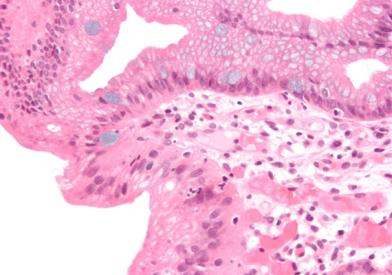
rising. Barrett esophagus contains glandular epithelium cephalad to the
esophagogastric junction.
Three different types of glandular epithelium can be
seen:
- Metaplastic columnar epithelium.
- Metaplastic parietal cell glandular
epithelium within the esophageal wall.
- Metaplastic intestinal epithelium
with typical goblet cells.
Dysplasia is particularly likely to develop in the
intestinal type mucosa.
Gastrointestinal stromal tumors can occur in the esophagus and are usually
benign. (Refer to the PDQ summary on Adult Soft Tissue Sarcoma Treatment for
more information.)
Top
Stage Information
The stage determines whether the intent of the therapeutic approach will be
curative or palliative. The American Joint Committee on Cancer (AJCC) has
designated staging by TNM classification.[1]
TNM Definitions
Primary tumor (T)
- TX: Primary tumor cannot be assessed
- T0: No evidence of primary tumor
- Tis: Carcinoma in situ
- T1: Tumor invades lamina propria or submucosa
- T2: Tumor invades muscularis propria
- T3: Tumor invades adventitia
- T4: Tumor invades adjacent structures
Regional lymph nodes (N)
- NX: Regional lymph nodes cannot be assessed
- N0: No regional lymph node metastasis
- N1: Regional lymph node metastasis
Distant metastasis (M)
- MX: Distant metastasis cannot be assessed
- M0: No distant metastasis
- M1: Distant metastasis
- Tumors of the lower thoracic esophagus:
- M1a: Metastasis in celiac lymph nodes
- M1b: Other distant metastasis
- Tumors of the midthoracic esophagus:
- M1a: Not applicable
- M1b: Nonregional lymph nodes and/or other distant metastasis
- Tumors of the upper thoracic esophagus:
- M1a: Metastasis in cervical nodes
- M1b: Other distant metastasis
For tumors of the midthoracic esophagus, use only M1b because these tumors with
metastases in nonregional lymph nodes have equally poor prognoses as do those
with metastases in other distant sites.
AJCC Stage Groupings
Stage 0
Stage I
Stage IIA
Stage IIB
Stage III
Stage IV
Stage IVA
Stage IVB
The current staging system for esophageal cancer is based largely on
retrospective data from the Japanese Committee for Registration of Esophageal
Carcinoma. It is most applicable to patients with squamous cell carcinomas of
the upper third and middle third of the esophagus, as opposed to the increasingly
common distal esophageal and gastroesophageal junction adenocarcinomas.[2] In
particular, the classification of involved abdominal lymph nodes as M1 disease
has been criticized. The presence of positive abdominal lymph nodes does not
appear to carry as grave a prognosis as metastases to distant organs.[3]
Patients with regional and/or celiac axis lymphadenopathy should not
necessarily be considered to have unresectable disease caused by metastases.
Complete resection of the primary tumor and appropriate lymphadenectomy should
be attempted when possible.
References:
Esophagus. In: American Joint Committee on Cancer.: AJCC Cancer Staging Manual. 6th ed. New York, NY: Springer, 2002, pp 91-8.
Iizuka T, Isono K, Kakegawa T, et al.: Parameters linked to ten-year survival in Japan of resected esophageal carcinoma. Japanese Committee for Registration of Esophageal Carcinoma Cases. Chest 96 (5): 1005-11, 1989.
Korst RJ, Rusch VW, Venkatraman E, et al.: Proposed revision of the staging classification for esophageal cancer. J Thorac Cardiovasc Surg 115 (3): 660-69; discussion 669-70, 1998.
Top
Treatment Option Overview
Note: Some citations in the text of this section are followed by a level of evidence. The PDQ editorial boards use a formal ranking system to help the reader judge the strength of evidence linked to the reported results of a therapeutic strategy. (Refer to the PDQ summary on Levels of Evidence for more information.)
The prevalence of Barrett metaplasia in adenocarcinoma of the esophagus
suggests that Barrett esophagus is a premalignant condition. Strong
consideration should be given to resection in patients with high-grade
dysplasia in the setting of Barrett metaplasia. Endoscopic surveillance of
patients with Barrett metaplasia may detect adenocarcinoma at an earlier
stage more amenable to curative resection.[1] The survival rate of patients
with esophageal cancer is poor. Asymptomatic small tumors confined to the
esophageal mucosa or submucosa are detected only by chance. Surgery is the
treatment of choice for these small tumors. Once symptoms are present
(e.g., dysphagia, in most cases), esophageal cancers have usually invaded
the muscularis propria or beyond and may have metastasized to lymph nodes or
other organs.
In the presence of complete esophageal obstruction without clinical evidence
of systemic metastasis, surgical excision of the tumor with mobilization of the
stomach to replace the esophagus has been the traditional means of relieving
the dysphagia. In the United States, the median age of patients who present
with esophageal cancer is 67 years.[2] The results of a retrospective
review of 505 consecutive patients who were operated on by a single surgical
team over 17 years found no difference in the perioperative mortality, median
survival, or palliative benefit of esophagectomy on dysphagia when the group of
patients older than 70 years were compared to their younger peers.[3][Level of
evidence: 3iiA, 3iiB] All of the patients in this series were selected for
surgery on the basis of potential operative risk. Age alone should not determine
therapy for patients with potentially resectable disease.
The optimal surgical procedure is controversial. One approach
advocates transhiatal esophagectomy with anastomosis of the stomach to the
cervical esophagus. A second approach advocates abdominal mobilization of the
stomach and transthoracic excision of the esophagus with anastomosis of the
stomach to the upper thoracic esophagus or the cervical esophagus. One study concluded that transhiatal esophagectomy was associated with lower morbidity than transthoracic esophagectomy with extended en bloc lymphadenectomy; however, median overall disease-free and quality-adjusted survival did not differ significantly.[4] Similarly, no differences in long-term quality of life (QOL) using validated QOL instruments have been reported.[5] In patients
with partial esophageal obstruction, dysphagia may, at times, be relieved by
placement of an expandable metallic stent [6] or by radiation therapy if the
patient has disseminated disease or is not a candidate for surgery.
Alternative methods of relieving dysphagia have been reported, including laser
therapy and electrocoagulation to destroy intraluminal tumor.[7][8][9][10]
Surgical treatment of resectable esophageal cancers results in 5-year survival
rates of 5% to 30%, with higher survival rates in patients with early-stage
cancers. This is associated with a less than 10% operative mortality rate.[11]
In an attempt to avoid this perioperative mortality and to relieve dysphagia,
definitive radiation therapy in combination with chemotherapy has been studied.
An Intergroup
randomized trial, Radiation Therapy Oncology Group known as RTOG-8501, of chemotherapy and radiation therapy versus radiation therapy
alone resulted in an improvement in 5-year survival for the combined modality
group (27% vs. 0%).[12][Level of evidence: 1iiA] An eight-year follow-up of this trial
demonstrated an overall survival (OS) rate of 22% for patients receiving
chemoradiation therapy.[12] An Eastern Cooperative Oncology Group trial (EST-1282) of 135
patients showed that chemotherapy plus radiation provided a better 2-year
survival rate than radiation therapy alone,[13] which was similar to that shown in the
Intergroup trial.[12][Level of evidence: 1iiA] In an attempt to improve upon the results
of RTOG-8501, Intergroup-0123 (RTOG-9405) randomly assigned 236 patients with
localized esophageal tumors to chemoradiation with high-dose radiation therapy
(64.8 Gy) and four monthly cycles of fluorouracil (5-FU) and cisplatin versus conventional-dose radiation therapy (50.4 Gy) and the same chemotherapy schedule.[14]
Although originally designed to accrue 298 patients, this trial was closed in 1999 after a planned interim analysis showed that it was statistically unlikely that there would be any advantage to using high-dose radiation. At 2 years' median follow-up, no statistical differences were observed between the high-dose and
conventional-dose radiation therapy arms in median survival (13 months vs.
18 months), 2-year survival (31% vs. 40%), or local/regional failures (56%
vs. 52%).[14][Level of evidence: 1iiA]
Phase III trials have compared preoperative concurrent chemoradiation therapy to
surgery alone for patients with esophageal cancer.[15][16][17][18][Level of evidence: 1iiA] A multicenter
prospective randomized trial in which preoperative combined chemotherapy
(i.e., cisplatin) and radiation therapy (37 Gy in 3.7 Gy fractions) followed by
surgery was compared to surgery alone in patients with squamous cell carcinoma
showed no improvement in OS and a significantly higher
postoperative mortality (12% vs. 4%) in the combined modality arm.[15] In
patients with adenocarcinoma of the esophagus, a single-institution phase III
trial demonstrated a modest survival benefit (16 months vs. 11 months) for
patients treated with induction chemoradiation therapy consisting of 5-FU,
cisplatin, and 40 Gy (2.67 Gy fractions) plus surgery over resection
alone.[16] A subsequent single-institution trial randomly assigned patients (75% with
adenocarcinoma) to 5-FU, cisplatin, vinblastine, and radiation
therapy (1.5 Gy twice daily to a total of 45 Gy) plus resection versus
esophagectomy alone.[17] At a median follow-up of more than 8 years, there was no
significant difference between the surgery alone and combined modality therapy
with respect to median survival (17.6 months vs. 16.9 months), OS (16% vs. 30% at 3 years), or disease-free survival (16% vs. 28%
at 3 years). An Intergroup trial (CALGB-9781) planned to randomly assign 475 patients with resectable squamous cell or adenocarcinoma of the thoracic esophagus to treatment with preoperative chemoradiation therapy (5-FU, cisplatin, and 50.4 Gy) followed by esophagectomy and nodal dissection or surgery alone.[18][Level of evidence: 1iiA] The trial was closed as a result of poor patient accrual; however, the results of the 56 enrolled patients, with a median follow-up of 6 years, were reported. The median survival was 4.48 years (95% confidence interval [CI], 2.4 years to not estimable) for trimodality therapy versus 1.79 years (95% CI, 1.41–2.59 years) for surgery alone (P = .002), with 5-year OS of 39% (95% CI, 21%–57%) versus 16% (95% CI, 5%–33%) for trimodality therapy versus surgery alone. On the basis of the results of these randomized trials,
the optimal therapy for stages IIB, III, and IVA esophageal cancer remains to be defined, but surgery alone appears to be increasingly inadequate.
A phase III German trial also compared induction chemotherapy (three courses of bolus 5-FU, leucovorin, etoposide, and cisplatin) followed by chemoradiation therapy (cisplatin, etoposide, and 40 Gy) followed by surgery (arm A), or the same induction chemotherapy followed by chemoradiation therapy (at least 65 Gy) without surgery (arm B) for patients with T3 or T4 squamous cell carcinoma of the esophagus.[19][Level of evidence: 1iiA] OS was the primary outcome. The analysis of 172 eligible, randomly assigned patients showed that OS at 2 years was not statistically significantly different between the two treatment groups (arm A: 39.9%; 95% CI, 29.4%–50.4%; arm B: 35.4%; 95% CI, 25.2%–45.6%; log-rank test for equivalence with 0.15, P < .007). Local progression-free survival (PFS) was higher in the surgery group (2-year PFS, 64.3%; 95% CI, 52.1%–76.5%) than in the chemoradiation therapy group (2-year PFS, 40.7%; 95% CI, 28.9%–52.5%; hazard ratio for arm B vs. arm A, 2.1; 95% CI, 1.3–3.5; P < .003). Treatment-related mortality was higher in the surgery group compared with the chemoradiation therapy group (12.8% vs. 3.5%, respectively; P < .03).
The effects of preoperative chemotherapy have been evaluated in two randomized trials, including the NCT00525785 trial.[20][21][Level of evidence: 1iiA]. An Intergroup trial randomly assigned 440 patients with local and operable esophageal cancer of any cell type to three cycles of preoperative 5-FU and cisplatin followed by surgery and two additional cycles of chemotherapy versus surgery alone. After a median follow-up of 55 months, there were no significant differences between the chemotherapy/surgery and surgery-alone groups in median survival (14.9 months and 16.1 months, respectively) or 2-year survival (35% and 37%, respectively). The addition of chemotherapy did not increase the morbidity associated with surgery. The Medical Research Council Oesophageal Cancer Working Party randomly assigned 802 patients with resectable esophageal cancer also of any cell type to two cycles of preoperative 5-FU and cisplatin followed by surgery versus surgery alone. At a median follow-up of 37 months, median survival was significantly improved in the preoperative chemotherapy arm (16.8 months vs. 13.3 months with surgery alone; difference 3.5 months; 95% CI, 1–6.5 months), as was 2-year OS (43% and 34% respectively; difference 9%; 95% CI, 3–14 months). The interpretation of the results from both of these trials is challenging because T or N staging was not reported and prerandomization and radiation could be offered at the discretion of the treating oncologist. Therefore, preoperative chemotherapy should still be considered under clinical evaluation.
Two randomized trials have shown no significant OS benefit
for postoperative radiation therapy over surgery alone.[22][23][Level of evidence: 1iiA] All newly
diagnosed patients should be considered candidates for therapies and
clinical trials comparing various treatment modalities.
Information about ongoing clinical trials is available from the NCI Web site.
Special attention to nutritional support is indicated in any patient undergoing
treatment of esophageal cancer. (Refer to the PDQ summary on Nutrition in Cancer Care for more information.)
References:
Lerut T, Coosemans W, Van Raemdonck D, et al.: Surgical treatment of Barrett's carcinoma. Correlations between morphologic findings and prognosis. J Thorac Cardiovasc Surg 107 (4): 1059-65; discussion 1065-6, 1994.
Ginsberg RJ: Cancer treatment in the elderly. J Am Coll Surg 187 (4): 427-8, 1998.
Ellis FH Jr, Williamson WA, Heatley GJ: Cancer of the esophagus and cardia: does age influence treatment selection and surgical outcomes? J Am Coll Surg 187 (4): 345-51, 1998.
Hulscher JB, van Sandick JW, de Boer AG, et al.: Extended transthoracic resection compared with limited transhiatal resection for adenocarcinoma of the esophagus. N Engl J Med 347 (21): 1662-9, 2002.
de Boer AG, van Lanschot JJ, van Sandick JW, et al.: Quality of life after transhiatal compared with extended transthoracic resection for adenocarcinoma of the esophagus. J Clin Oncol 22 (20): 4202-8, 2004.
Saxon RR, Morrison KE, Lakin PC, et al.: Malignant esophageal obstruction and esophagorespiratory fistula: palliation with a polyethylene-covered Z-stent. Radiology 202 (2): 349-54, 1997.
Campbell WR Jr, Taylor SA, Pierce GE, et al.: Therapeutic alternatives in patients with esophageal cancer. Am J Surg 150 (6): 665-8, 1985.
Mellow MH, Pinkas H: Endoscopic therapy for esophageal carcinoma with Nd:YAG laser: prospective evaluation of efficacy, complications, and survival. Gastrointest Endosc 30 (6): 334-9, 1984.
Fleischer D, Sivak MV Jr: Endoscopic Nd:YAG laser therapy as palliation for esophagogastric cancer. Parameters affecting initial outcome. Gastroenterology 89 (4): 827-31, 1985.
Karlin DA, Fisher RS, Krevsky B: Prolonged survival and effective palliation in patients with squamous cell carcinoma of the esophagus following endoscopic laser therapy. Cancer 59 (11): 1969-72, 1987.
Kelsen DP, Bains M, Burt M: Neoadjuvant chemotherapy and surgery of cancer of the esophagus. Semin Surg Oncol 6 (5): 268-73, 1990.
Cooper JS, Guo MD, Herskovic A, et al.: Chemoradiotherapy of locally advanced esophageal cancer: long-term follow-up of a prospective randomized trial (RTOG 85-01). Radiation Therapy Oncology Group. JAMA 281 (17): 1623-7, 1999.
Smith TJ, Ryan LM, Douglass HO Jr, et al.: Combined chemoradiotherapy vs. radiotherapy alone for early stage squamous cell carcinoma of the esophagus: a study of the Eastern Cooperative Oncology Group. Int J Radiat Oncol Biol Phys 42 (2): 269-76, 1998.
Minsky BD, Pajak TF, Ginsberg RJ, et al.: INT 0123 (Radiation Therapy Oncology Group 94-05) phase III trial of combined-modality therapy for esophageal cancer: high-dose versus standard-dose radiation therapy. J Clin Oncol 20 (5): 1167-74, 2002.
Bosset JF, Gignoux M, Triboulet JP, et al.: Chemoradiotherapy followed by surgery compared with surgery alone in squamous-cell cancer of the esophagus. N Engl J Med 337 (3): 161-7, 1997.
Walsh TN, Noonan N, Hollywood D, et al.: A comparison of multimodal therapy and surgery for esophageal adenocarcinoma. N Engl J Med 335 (7): 462-7, 1996.
Urba SG, Orringer MB, Turrisi A, et al.: Randomized trial of preoperative chemoradiation versus surgery alone in patients with locoregional esophageal carcinoma. J Clin Oncol 19 (2): 305-13, 2001.
Tepper J, Krasna MJ, Niedzwiecki D, et al.: Phase III trial of trimodality therapy with cisplatin, fluorouracil, radiotherapy, and surgery compared with surgery alone for esophageal cancer: CALGB 9781. J Clin Oncol 26 (7): 1086-92, 2008.
Stahl M, Stuschke M, Lehmann N, et al.: Chemoradiation with and without surgery in patients with locally advanced squamous cell carcinoma of the esophagus. J Clin Oncol 23 (10): 2310-7, 2005.
Kelsen DP, Ginsberg R, Pajak TF, et al.: Chemotherapy followed by surgery compared with surgery alone for localized esophageal cancer. N Engl J Med 339 (27): 1979-84, 1998.
Medical Research Council Oesophageal Cancer Working Group.: Surgical resection with or without preoperative chemotherapy in oesophageal cancer: a randomised controlled trial. Lancet 359 (9319): 1727-33, 2002.
Ténière P, Hay JM, Fingerhut A, et al.: Postoperative radiation therapy does not increase survival after curative resection for squamous cell carcinoma of the middle and lower esophagus as shown by a multicenter controlled trial. French University Association for Surgical Research. Surg Gynecol Obstet 173 (2): 123-30, 1991.
Fok M, Sham JS, Choy D, et al.: Postoperative radiotherapy for carcinoma of the esophagus: a prospective, randomized controlled study. Surgery 113 (2): 138-47, 1993.
Top
Stage 0 Esophageal Cancer
Stage 0 squamous esophageal cancer is rarely seen in the United States, but
surgery has been used for this stage of cancer.[1][2]
Current Clinical Trials
Check for U.S. clinical trials from NCI's PDQ Cancer Clinical Trials Registry that are now accepting patients with
stage 0 esophageal cancer. The list of clinical trials can be further narrowed by location, drug, intervention, and other criteria.
General information about clinical trials is also available from the NCI Web site.
References:
Rusch VW, Levine DS, Haggitt R, et al.: The management of high grade dysplasia and early cancer in Barrett's esophagus. A multidisciplinary problem. Cancer 74 (4): 1225-9, 1994.
Heitmiller RF, Redmond M, Hamilton SR: Barrett's esophagus with high-grade dysplasia. An indication for prophylactic esophagectomy. Ann Surg 224 (1): 66-71, 1996.
Top
Stage I Esophageal Cancer
Standard treatment option:
Treatment options under clinical evaluation:
Current Clinical Trials
Check for U.S. clinical trials from NCI's PDQ Cancer Clinical Trials Registry that are now accepting patients with
stage I esophageal cancer. The list of clinical trials can be further narrowed by location, drug, intervention, and other criteria.
General information about clinical trials is also available from the NCI Web site.
Top
Stage II Esophageal Cancer
Standard treatment options:
- Surgery.
- Chemoradiation.
Treatment option under clinical evaluation:
- Chemoradiation with subsequent surgery, such as in the RTOG-8501 trial.[1][2][3]
Current Clinical Trials
Check for U.S. clinical trials from NCI's PDQ Cancer Clinical Trials Registry that are now accepting patients with
stage II esophageal cancer. The list of clinical trials can be further narrowed by location, drug, intervention, and other criteria.
General information about clinical trials is also available from the NCI Web site.
References:
Cooper JS, Guo MD, Herskovic A, et al.: Chemoradiotherapy of locally advanced esophageal cancer: long-term follow-up of a prospective randomized trial (RTOG 85-01). Radiation Therapy Oncology Group. JAMA 281 (17): 1623-7, 1999.
Herskovic A, Al-Sarraf M: Combination of 5-Fluorouracil and Radiation in Esophageal Cancer. Semin Radiat Oncol 7 (4): 283-290, 1997.
Ajani JA, Komaki R, Putnam JB, et al.: A three-step strategy of induction chemotherapy then chemoradiation followed by surgery in patients with potentially resectable carcinoma of the esophagus or gastroesophageal junction. Cancer 92 (2): 279-86, 2001.
Top
Stage III Esophageal Cancer
Standard treatment options:
- Surgical resection of T3 lesions.
- Chemoradiation.
Treatment options under clinical evaluation:
- Chemoradiation with subsequent surgery, such as in the RTOG-8501 trial.[1][2]
Current Clinical Trials
Check for U.S. clinical trials from NCI's PDQ Cancer Clinical Trials Registry that are now accepting patients with
stage III esophageal cancer. The list of clinical trials can be further narrowed by location, drug, intervention, and other criteria.
General information about clinical trials is also available from the NCI Web site.
References:
Cooper JS, Guo MD, Herskovic A, et al.: Chemoradiotherapy of locally advanced esophageal cancer: long-term follow-up of a prospective randomized trial (RTOG 85-01). Radiation Therapy Oncology Group. JAMA 281 (17): 1623-7, 1999.
Herskovic A, Al-Sarraf M: Combination of 5-Fluorouracil and Radiation in Esophageal Cancer. Semin Radiat Oncol 7 (4): 283-290, 1997.
Top
Stage IV Esophageal Cancer
At diagnosis, approximately 50% of patients with esophageal cancer will have
metastatic disease and will be candidates for palliative therapy.[1]
Standard treatment options:
- Endoscopic-placed stents to provide palliation of dysphagia.[2]
- Radiation therapy with or without intraluminal intubation and dilation.
- Intraluminal brachytherapy to provide palliation of dysphagia.[3][4]
- Nd:YAG endoluminal tumor destruction or electrocoagulation.[5]
- Chemotherapy has provided partial responses for patients with metastatic
distal esophageal adenocarcinomas.[6][7][8]
Treatment options under clinical evaluation:
Many agents are active in esophageal cancer. Objective response rates of 30%
to 60% and median survivals of less than 1 year are commonly reported with
platinum-based combination regimens with fluorouracil, taxanes, topoisomerase inhibitors, hydroxyurea, or vinorelbine.[1][8][9]
- Clinical trials evaluating single-agent or combination chemotherapy.
Current Clinical Trials
Check for U.S. clinical trials from NCI's PDQ Cancer Clinical Trials Registry that are now accepting patients with
stage IV esophageal cancer. The list of clinical trials can be further narrowed by location, drug, intervention, and other criteria.
General information about clinical trials is also available from the NCI Web site.
References:
Enzinger PC, Ilson DH, Kelsen DP: Chemotherapy in esophageal cancer. Semin Oncol 26 (5 Suppl 15): 12-20, 1999.
Baron TH: Expandable metal stents for the treatment of cancerous obstruction of the gastrointestinal tract. N Engl J Med 344 (22): 1681-7, 2001.
Sur RK, Levin CV, Donde B, et al.: Prospective randomized trial of HDR brachytherapy as a sole modality in palliation of advanced esophageal carcinoma--an International Atomic Energy Agency study. Int J Radiat Oncol Biol Phys 53 (1): 127-33, 2002.
Gaspar LE, Nag S, Herskovic A, et al.: American Brachytherapy Society (ABS) consensus guidelines for brachytherapy of esophageal cancer. Clinical Research Committee, American Brachytherapy Society, Philadelphia, PA. Int J Radiat Oncol Biol Phys 38 (1): 127-32, 1997.
Bourke MJ, Hope RL, Chu G, et al.: Laser palliation of inoperable malignant dysphagia: initial and at death. Gastrointest Endosc 43 (1): 29-32, 1996.
Waters JS, Norman A, Cunningham D, et al.: Long-term survival after epirubicin, cisplatin and fluorouracil for gastric cancer: results of a randomized trial. Br J Cancer 80 (1-2): 269-72, 1999.
Ross P, Nicolson M, Cunningham D, et al.: Prospective randomized trial comparing mitomycin, cisplatin, and protracted venous-infusion fluorouracil (PVI 5-FU) With epirubicin, cisplatin, and PVI 5-FU in advanced esophagogastric cancer. J Clin Oncol 20 (8): 1996-2004, 2002.
Taïeb J, Artru P, Baujat B, et al.: Optimisation of 5-fluorouracil (5-FU)/cisplatin combination chemotherapy with a new schedule of hydroxyurea, leucovorin, 5-FU and cisplatin (HLFP regimen) for metastatic oesophageal cancer. Eur J Cancer 38 (5): 661-6, 2002.
Conroy T, Etienne PL, Adenis A, et al.: Vinorelbine and cisplatin in metastatic squamous cell carcinoma of the oesophagus: response, toxicity, quality of life and survival. Ann Oncol 13 (5): 721-9, 2002.
Top
Recurrent Esophageal Cancer
All recurrent esophageal cancer patients present difficult problems in
palliation. All patients, whenever possible, should be considered candidates
for clinical trials as outlined in treatment overview.
Standard treatment options:
-
Palliative use of any of the standard therapies, including supportive care.
Treatment options under clinical evaluation:
Current Clinical Trials
Check for U.S. clinical trials from NCI's PDQ Cancer Clinical Trials Registry that are now accepting patients with
recurrent esophageal cancer. The list of clinical trials can be further narrowed by location, drug, intervention, and other criteria.
General information about clinical trials is also available from the NCI Web site.
Top
More Information
About PDQ
Additional PDQ Summaries
Important:
This information is intended mainly for use by doctors and other health care professionals. If you have questions about this topic, you can ask your doctor, or call the Cancer Information Service at 1-800-4-CANCER (1-800-422-6237).
Top
This information is provided by the National Cancer Institute.
This information was last updated on July 2, 2009.